

How to keep your property safe
July 29, 2025
The ultimate guide to choosing the right security company
September 15, 2025
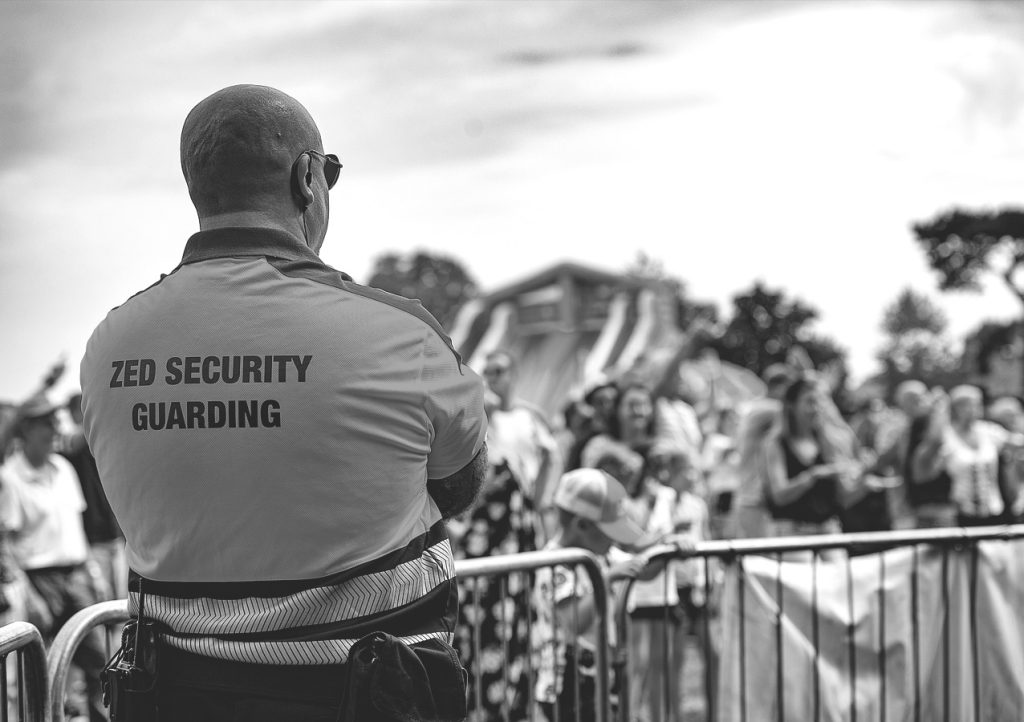
Body-worn cameras are becoming an increasingly common feature in the security industry. From retail stores and shopping centres to construction sites and public events, body cameras are a useful tool, offering valuable protection for both security personnel and the public. But are security guards legally allowed to wear body cameras? The answer is yes provided they follow strict legal and regulatory requirements.
Why use body cameras?
Security guards often face challenging situations including verbal abuse, physical threats or false accusations. Body cameras can serve several important purposes:
Evidence collection: Recordings can be used to support investigations, insurance claims or criminal proceedings.
Deterrent: The visible presence of a camera often deters aggressive or criminal behaviour because the perpetrator knows they will be caught on camera.
Accountability: Body cameras protect both guards and the public by promoting professionalism and transparency.
Training: Footage can be used to review incidents and improve future performance.
Given these benefits, it’s not surprising body cameras are increasingly being used by private security firms across the UK.
Legal framework
In the UK, the use of body cameras by security guards is permitted but it’s tightly regulated under several key laws and guidelines:
Data Protection Act 2018 and GDPR
Because body cameras record personal data, they fall under the remit of the Data Protection Act 2018 and the UK General Data Protection Regulation (UK GDPR). This means security companies must meet certain criteria if their staff are to use body cameras.
Have a lawful basis for recording
This would include the criteria that the information being gathered is in the public interest or a there is a legitimate reason for cameras being used.
Security guards must also inform people when they are being recorded. That might be through signage or by telling the person being filmed.
Body cameras should only be used to record when it is deemed necessary such as during an incident or when a conflict is likely. Once filmed, the data must be stored securely with restricted access and the footage should only be kept as long as it is needed. It should then be deleted.
Code of Practice
Security firms must follow the Surveillance Camera Code of Practice which is issued by the Surveillance Camera Commissioner. This sets out principles of proportionality, transparency and accountability.
SIA Licensing
In many cases, security guards wearing body cameras must hold an active SIA (Security Industry Authority) licence. If the guard is undertaking licensable activities and using a body camera to record audio, it may fall under the definition of public space surveillance (CCTV), requiring a specific licence.
Best Practices
To ensure legal compliance and ethical use, security companies should create a written policy which sets out how and when cameras are used. Their security guards should be trained on protocols associated with body cam use including privacy rights. Data protection procedures should also be put in place to ensure the footage is securely stored and deleted as necessary.
Regular audits should also be carried out to ensure the company complied with up to date legal standards.
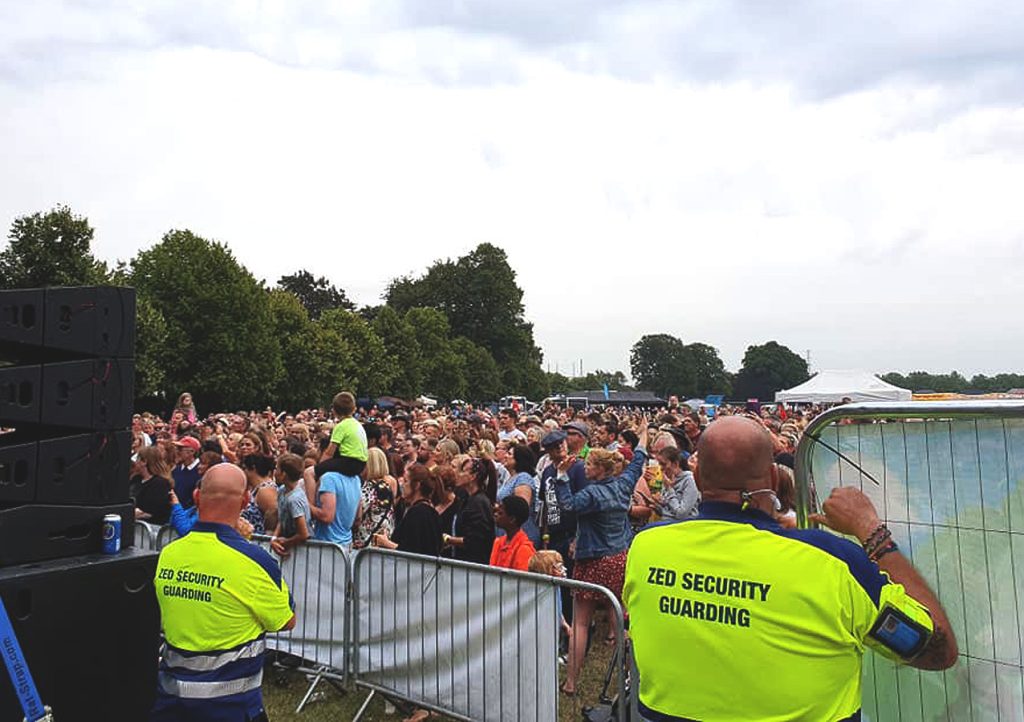
Zed Security offers a range of key services to keep the public, events and properties safe. These include static guarding, door supervision and event security. In these roles, body cameras are a valuable tool which can help to enhance safety, improve accountability and protect both staff and the public.
For more information or to speak to our team, contact us by calling 01206 481681 or 07424 291521 out of hours.